Apple Pay Now Works on Karbon Payment Links
Clients who open a Karbon payment link on an iPhone can now pay with Apple Pay. Google Pay was already there.
By Max Ducharme

As of Karbon’s October 26, 2026 release.
What changed
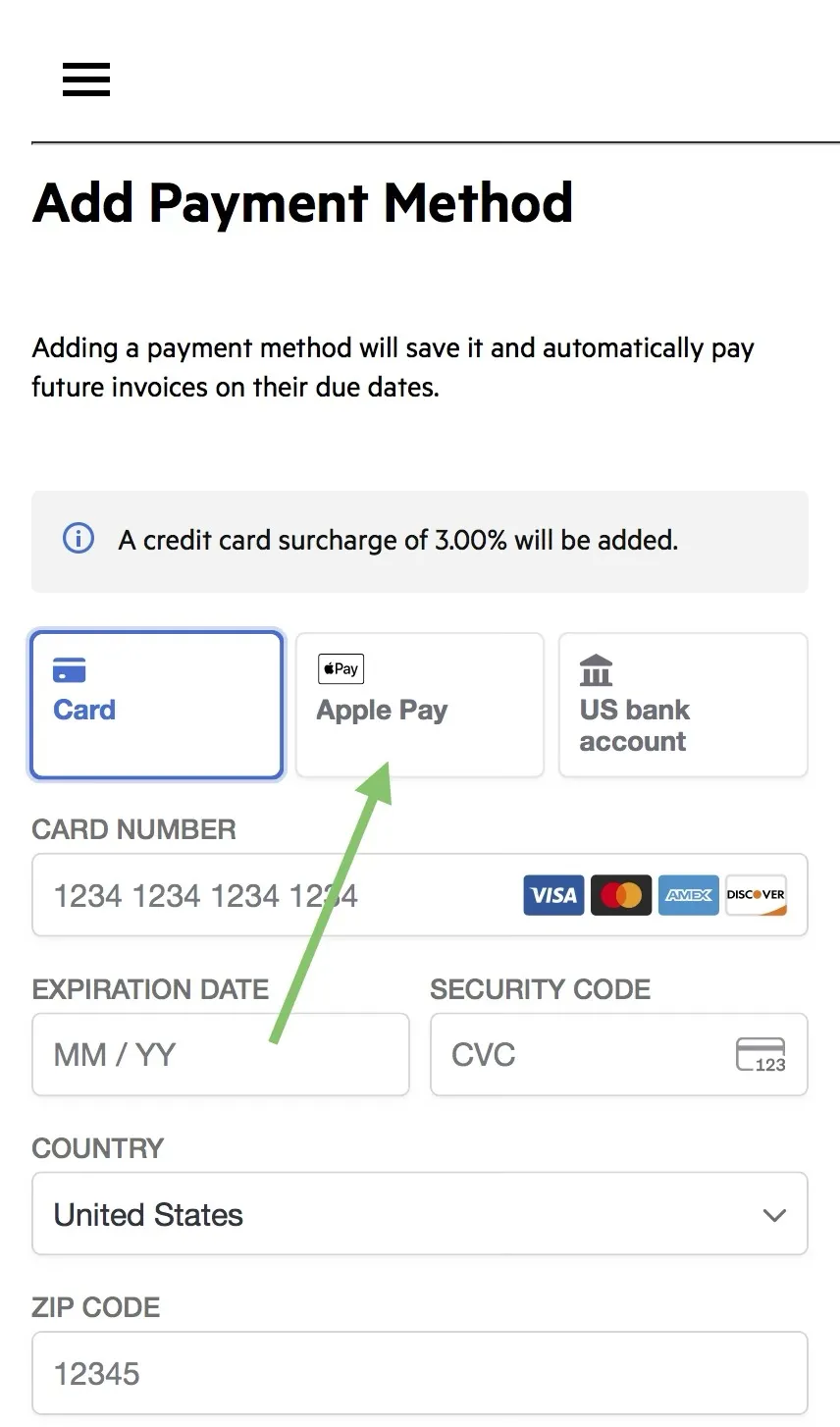
When a client opens a Karbon payment link on an iPhone or other Apple device, Apple Pay now appears as a payment option, and the payment processes in real time. Google Pay has been available on Android for a while.
What it changes day to day
Plenty of clients open invoices on their phones. Apple Pay is a payment flow they already know and trust, with no card number to type. Every step you remove between “here’s your invoice” and “paid” shortens the time money sits in limbo.
What I’d do
- Add a little note to your billing email templates: “You can pay this invoice from your phone with Apple and Google Pay.”
- Keep promoting ACH as your suggested method of payment. Apple Pay charges the client’s card, so card processing fees (and any surcharge you add) still apply. That means either a higher bill for the client (if you add a surcharge) or a higher processing fee for you.
- Karbon doesn’t currently display the surcharge information when a client uses Apple Pay, so add that language to your billing email templates if you use a surcharge.
- Vote for my Feature Idea in the Loft to add surcharge notifications to the billing flow when the client uses Apple or Google Pay.
Related
Brooks and I talk through this one in the October episode. More from this release: the October release roundup. Source: Karbon release notes, October 26, 2026.
Max Ducharme ran an accounting firm for five years. In that time, revenue more than doubled, and average revenue per employee rose from $89,000 to $150,000. He taught himself Python to build the integrations the firm needed. Today he builds tools that solve the problems accounting firms face now. He is a Six Sigma Black Belt and co-hosts the Working Theory podcast.